
How dental implants work — explained in 30 seconds
The five steps from a missing tooth to a new crown: implant, healing, abutment and crown.
In practice since 2000 and placing implants since 2008, with more than 1,000 implants placed: from a single tooth to full-arch treatment, including bone grafting and sinus lifts. Treatment, prices and bookings are at Perth Prime Dental in the Perth CBD.
Rated 5.0 on Google from 250+ patient reviews
From replacing one tooth to rebuilding a full smile, each treatment starts with an examination, X-rays and a clear plan. For prices, see the dental implant costs at Perth Prime Dental.
One titanium implant and a custom crown replace a single missing tooth, without grinding down the neighbouring teeth.
Learn more →A full arch of fixed, non-removable teeth supported by four strategically placed implants.
Learn more →Rebuilding lost jawbone so that implants can be placed in the right position.
Learn more →Adding bone under the sinus floor so implants can be placed in the upper back jaw.
Learn more →Rehabilitation of one or both jaws with implant-supported teeth, tailored to your bone and goals.
Learn more →A denture that clips onto 2–4 implants for stability, while remaining removable for cleaning.
Learn more →Bone loss is one of the most common reasons people are turned away. With advanced training in bone regeneration from the Urban Institute in Budapest, Dr Matin can often rebuild the bone needed for implants.
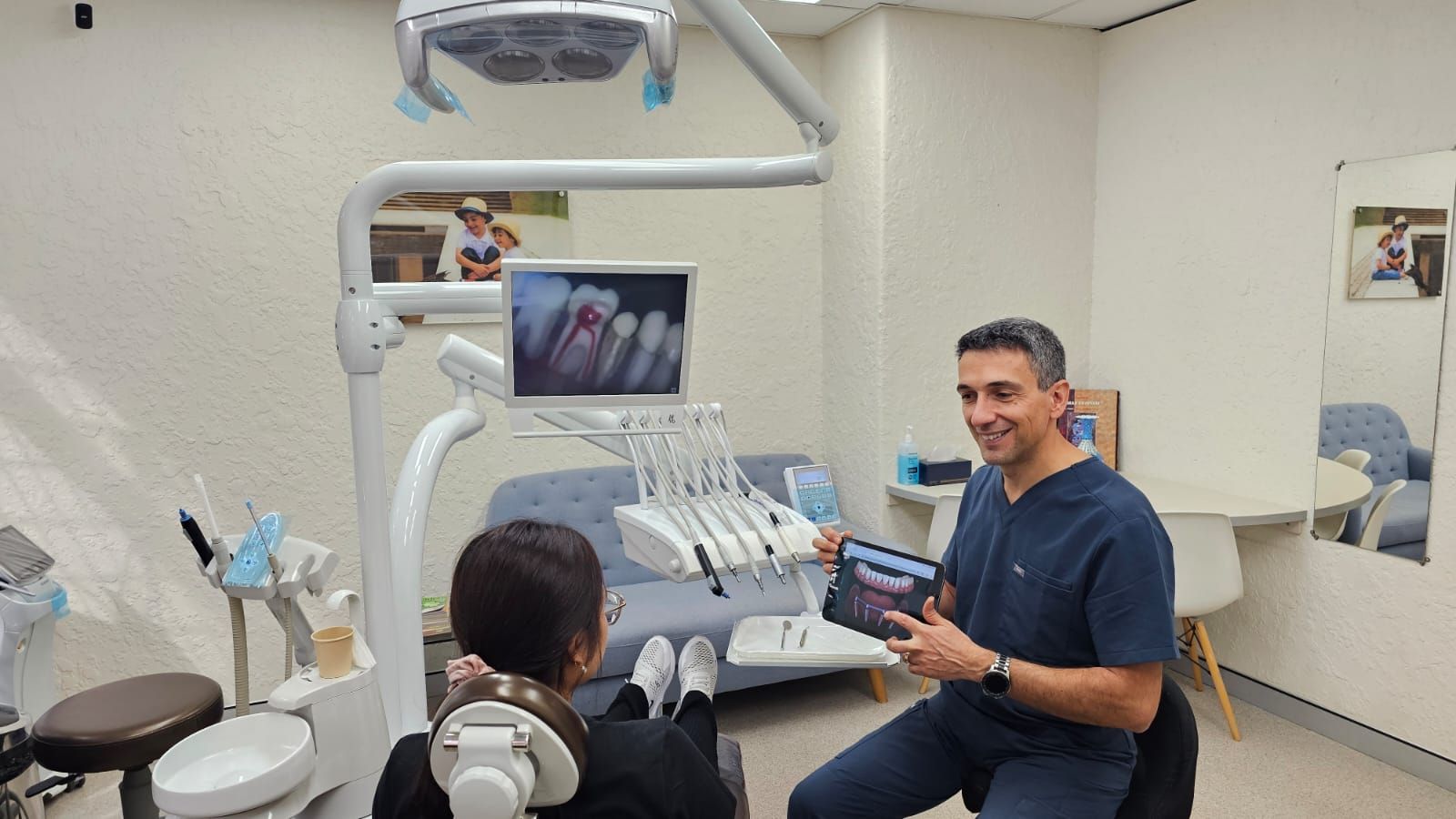
Bone grafting, ridge augmentation and sinus lifts are performed in the same practice — often for people who were told they were not suitable for implants.
Dr Matin personally handles consultation, planning, surgery and the final teeth, so you have continuity of care.
You receive a written quote listing every component — implant, abutment, crown and any grafting — before you commit.
Implant consultations are free and include an examination and X-rays, so you can understand your options before deciding.
On St Georges Terrace, close to public transport and parking, with early, late and Saturday appointments.
Honest advice about options, risks, timelines and costs — including when an implant may not be the best choice.
The five steps from a missing tooth to a new crown: implant, healing, abutment and crown.

How four implants can support a full arch of fixed teeth, step by step.
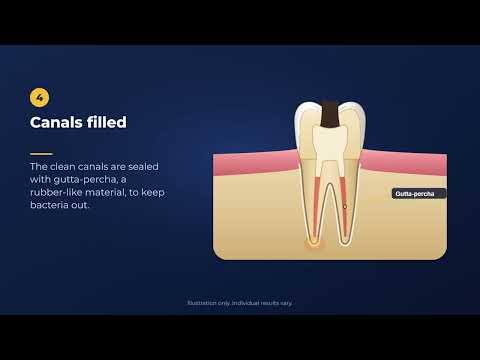
How an infected tooth is cleaned, filled and sealed so you can keep it, from the pulp to the final crown.
Dental implants are small titanium posts placed into the jawbone to replace the roots of missing teeth. Once an implant has integrated with the bone (osseointegration, usually 2–4 months), a custom crown, bridge or denture is attached on top. Implants are a well-established way to replace missing teeth without altering neighbouring teeth, and they help maintain the jawbone where a tooth has been lost.
Most adults with missing teeth can be assessed for implants. The key requirements are enough jawbone (or the ability to rebuild it with grafting), healthy gums and good general health. Smoking, uncontrolled diabetes and some medications can affect suitability. Dr Matin assesses each person individually with a clinical examination and X-rays.
Published studies report implant survival rates of around 95% at 10 years, and many implants last much longer. The crown on top may need replacing after 10–15 years due to normal wear. Longevity depends on oral hygiene, regular check-ups, not smoking, general health and the quality of planning and placement.
Implant surgery is performed under local anaesthetic, so the area is numb during the procedure. Afterwards, most people experience some soreness and swelling for a few days, which is usually managed with standard pain relief and ice packs. Many people return to normal activities within 1–2 days. Grafting and sinus lift procedures typically involve more swelling and a longer recovery.
A straightforward single implant usually takes 3–6 months from placement to the final crown, including 2–4 months of healing. If bone grafting is required first, the total time may extend to 6–12 months. With All-on-4, provisional teeth are often fitted on the day of surgery and the final teeth after 3–6 months.
Get a clinical assessment, a clear explanation of your options and a fully itemised quote — with no obligation to proceed.